Barrie Keeffe wrote Sus in 1979, as Margaret Thatcher was promising harmony from the door of Number 10. Thirty years later, with another election coming and stop and search back in the headlines, a group of East London filmmakers met to turn the play into a film. They met on 3 May 2009, thirty years to the day after the night the story is set. They shot it in ten days. It premiered in Bethnal Green twelve days before the 2010 election, and opened in cinemas the day after the vote. Bob Hoskins called it devastating. One critic said it was the best British film he had ever seen.
Trailer
Screeners are available to programmers and press on request.
Release details
Synopsis
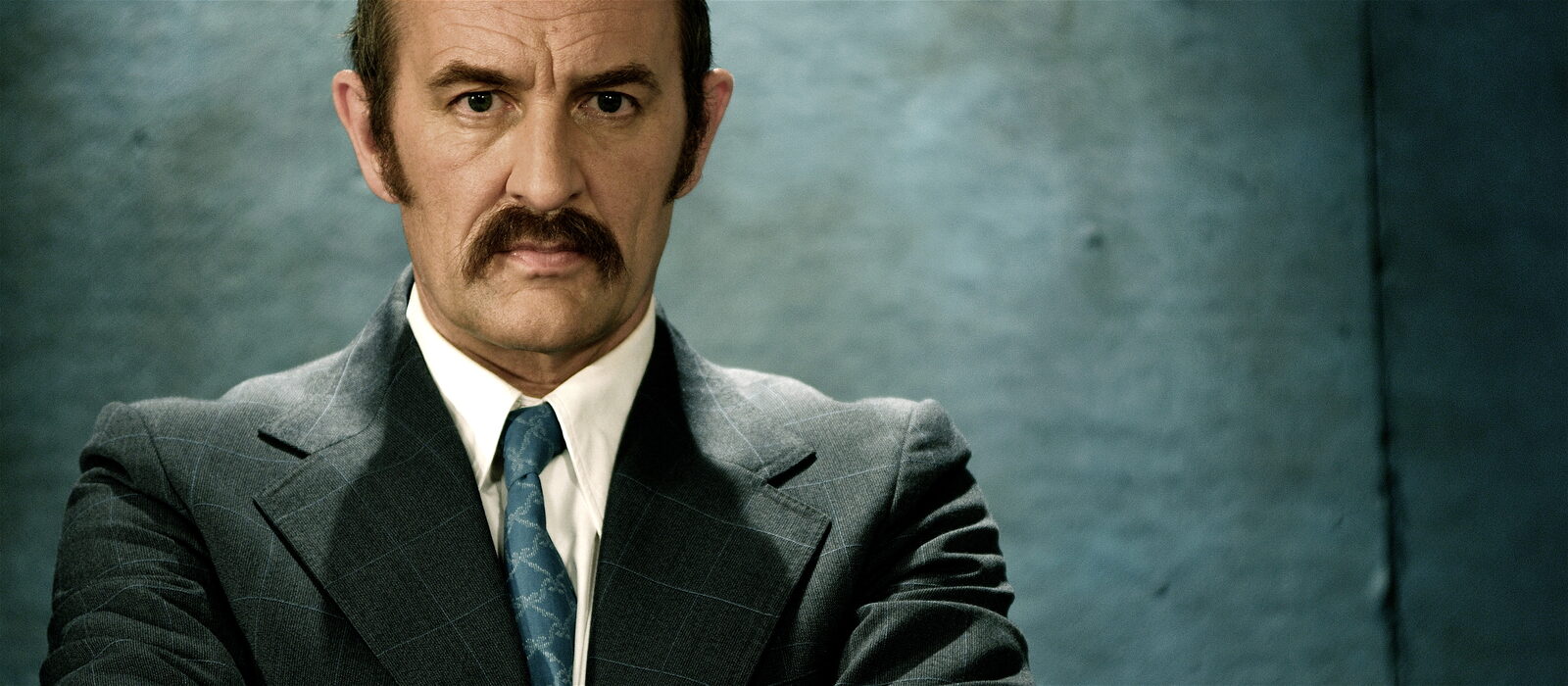
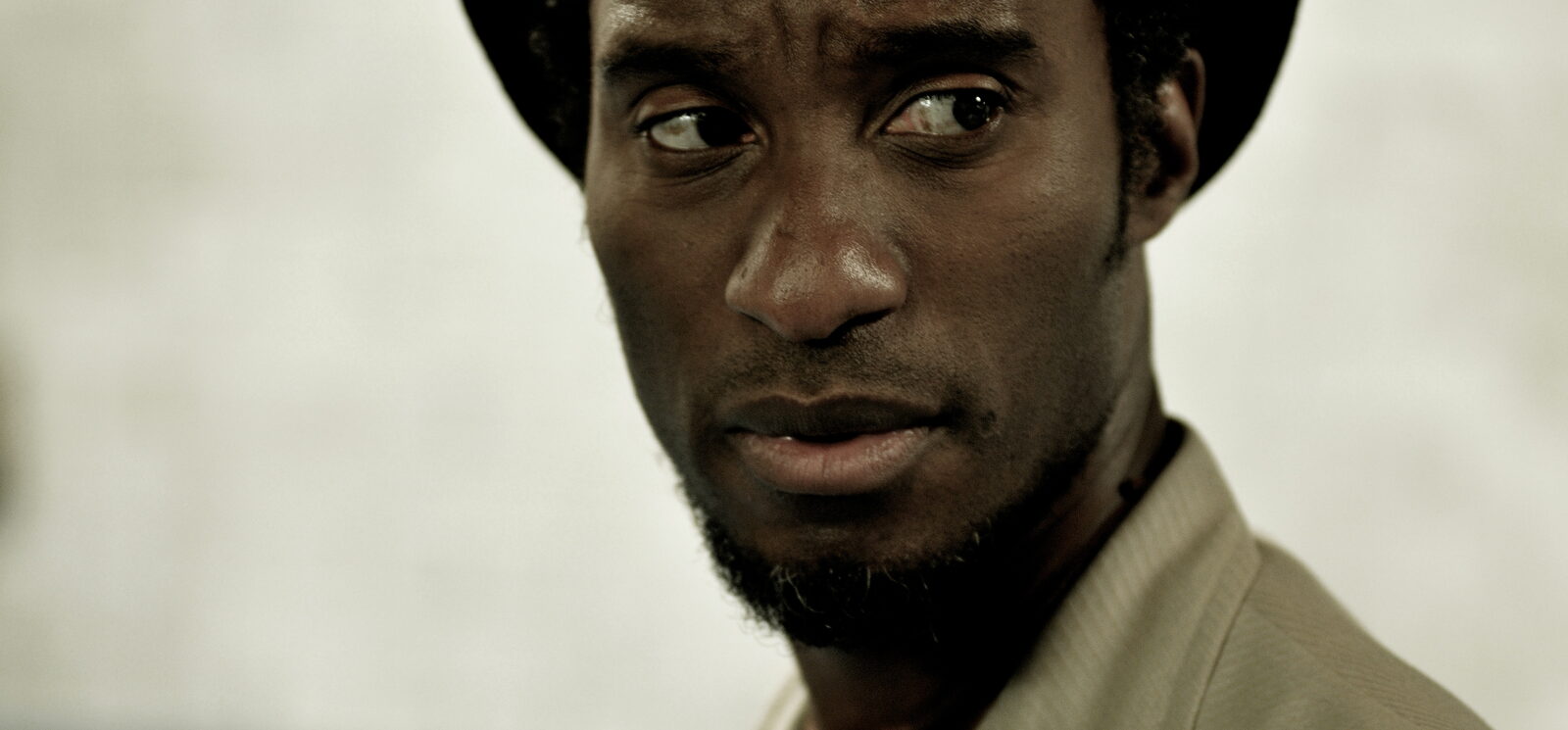
Election night, 1979. Margaret Thatcher is about to come to power. A young black man, Leon Delroy, is held at an East London police station on suspicion of murdering his pregnant wife. Detectives Karn and Wilby, racist to the core and high on the prospect of a Conservative victory, try to lure him into a quick confession.
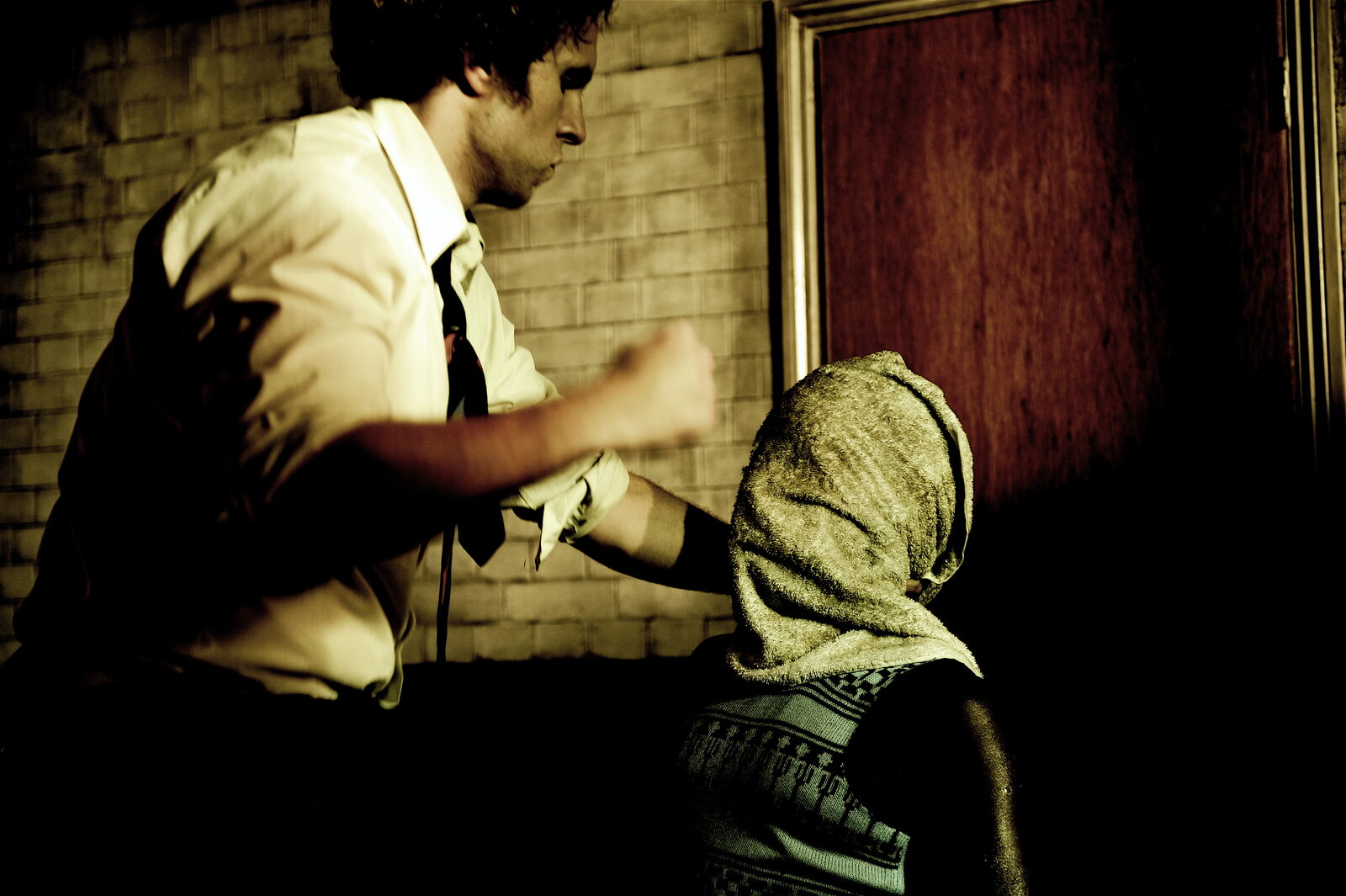
Delroy does not even know his wife is dead. The officers string him along. Callous humiliation gives way to a barrage of sinister violence, and the night moves towards a devastating conclusion.
Written by Barrie Keeffe, the writer behind the British classic The Long Good Friday, Sus is a tense, emotionally charged crime drama and an outcry against institutional racism. It also asks a question that has not gone away: in the age of counter-terrorism, has history caught up with us?
What was sus?
“Sus” was the informal name for a stop and search law that let a police officer act on suspicion alone.
It rested on sections 4 and 6 of the Vagrancy Act 1824, which made it illegal for “a suspected person or reputed thief” to frequent or loiter in a public place with intent to commit an arrestable offence. In practice it let the police stop, search and even arrest anyone they chose, purely on suspicion, as a crime prevention tactic.
The law was used disproportionately against black and minority ethnic communities and caused deep resentment. Its abuse was widely seen as a factor in the riots in St Pauls, Bristol, in 1980, and in Brixton and Toxteth in 1981. It was abolished soon after.
In January 2008, David Cameron, then Leader of the Opposition, said that if elected he would seek to return similar powers to the police. By 2010, as Clint Dyer pointed out, around ten thousand people a month were being stopped under Section 44 of the Terrorism Act.
A note from the writer
I wrote Sus shortly after Margaret Thatcher was swept to power in May 1979 and told the world from the doorway of Number Ten, “Where there is discord may we bring harmony. Where there is despair may we bring hope.” Living in South East London at the time, where the British fascists were causing fear and havoc, I felt very little hope, and wrote the play.
The story was a true incident I had covered as a reporter on a local weekly newspaper many years before. But it wasn't until Thatcher took up the reins that I found the backdrop for the play: election night, the “new dawn”, as Karn chillingly puts it. I'm saddened that this piece of work I wrote thirty years ago, and thought was exactly what one critic called “instant political theatre”, actually does have a painful resonance now.
Barrie Keeffe, 2010
Keeffe (1945 to 2019) worked for eleven years as a reporter on the Stratford Express before writing for the stage. He told the Camden New Journal where the story came from: “One day, when I was a young journalist, a black guy came to say this had happened to him. He was a broken, broken man.”
“It was writers like Barrie Keeffe that opened up the world for me. For the first time there was a purpose in this goddamn work other than just strutting around and spouting.”
Daniel Day-Lewis
About the production
On 3 May 2009, Clint Dyer, Robert Heath, Jono Smith and Robin Mahoney met to discuss a film of Barrie Keeffe's play. By coincidence it was thirty years to the day since the night the story is set.
All four were struck by how relevant the story still was. A general election was looming, possibly leading to a Tory victory. The Metropolitan Police's use of stop and search was taking up more and more column inches. A film was an opportunity not to be missed.
Sus was shot in CinemaScope on the RED camera in ten days, at Elstree Studios and on location in East London, including Shoreditch. Much of the team came from Hackney: the director from Dalston, Clint Dyer from De Beauvoir, and Mensch Films from London Fields, which co-ordinated post-production.
“We hope it's going to be a sleeper hit, a film that's so good that word of mouth keeps it alive in the cinema. It's a collaborative film made on a low budget by the community. We don't have a studio or a big budget from a TV company, but we had faith in the project.”
Robin Mahoney, Hackney Gazette, April 2010
The score is by Sally Herbert, with cello by Ian Burdge and additional music by Goldie, Nicholas Sutton and Joss Albert. The film uses The Specials' “It's Up to You” and lyrics from Bob Marley's “No Woman No Cry”, by kind permission of the Marley Estate. The film weaves in real footage of the period: Thatcher and Callaghan on the stump, David Dimbleby and Angela Rippon presenting, riots, Enoch Powell and Alf Garnett. Archive material came from the BBC, Don Letts and Menelik Shabazz.
Timeline
- 3 May 1979General election. Margaret Thatcher wins. The night in which Sus is set.
- 1979Barrie Keeffe writes the play in the weeks after the election.
- 1980 to 1981Riots in St Pauls, Brixton and Toxteth. The sus law is abolished.
- 3 May 2009Dyer, Heath, Smith and Mahoney meet to plan the film, thirty years to the day.
- July to August 2009Ten-day shoot at Elstree Studios and in East London.
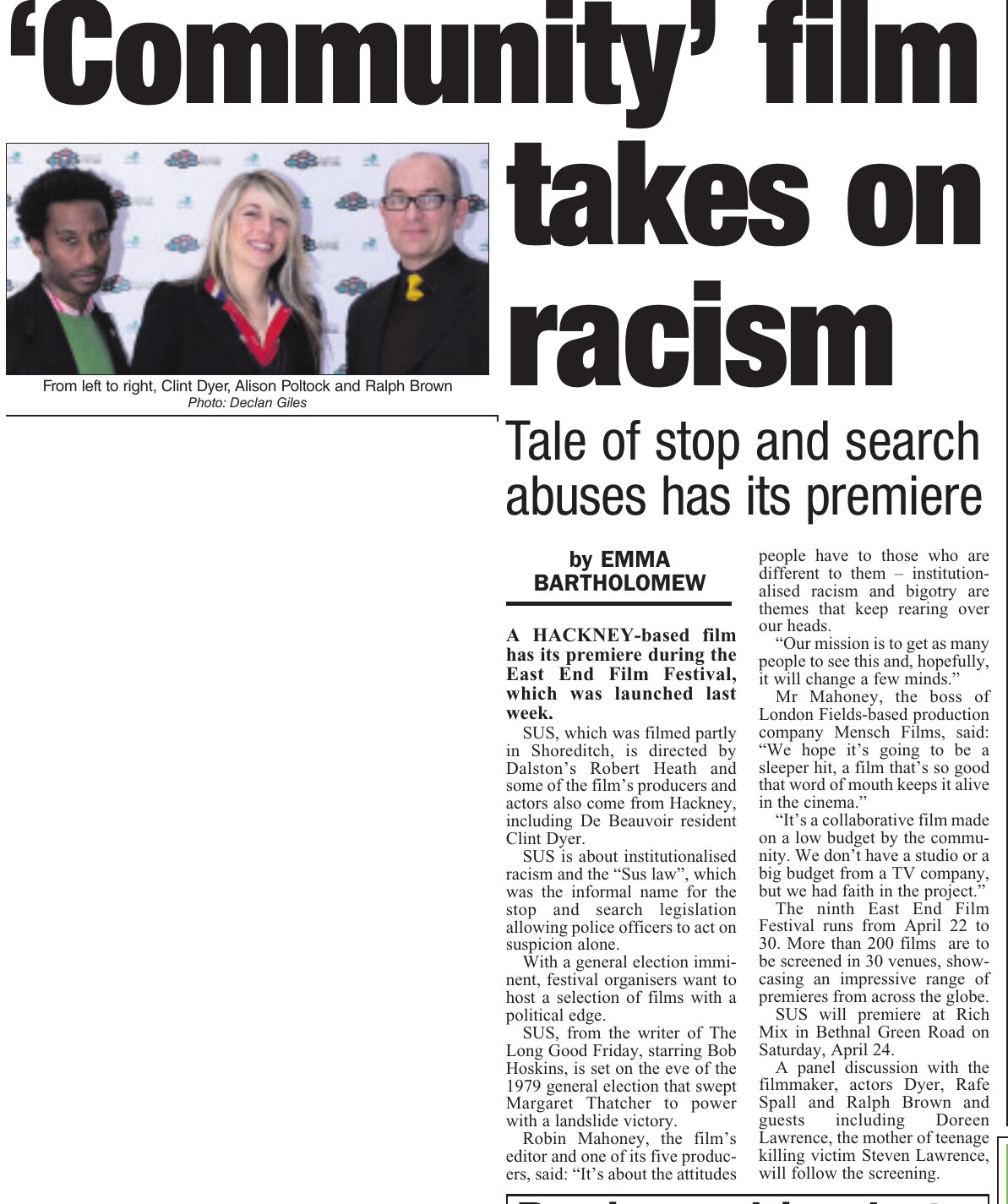
- 1 April 2010Hackney Gazette: “‘Community’ film takes on racism”.
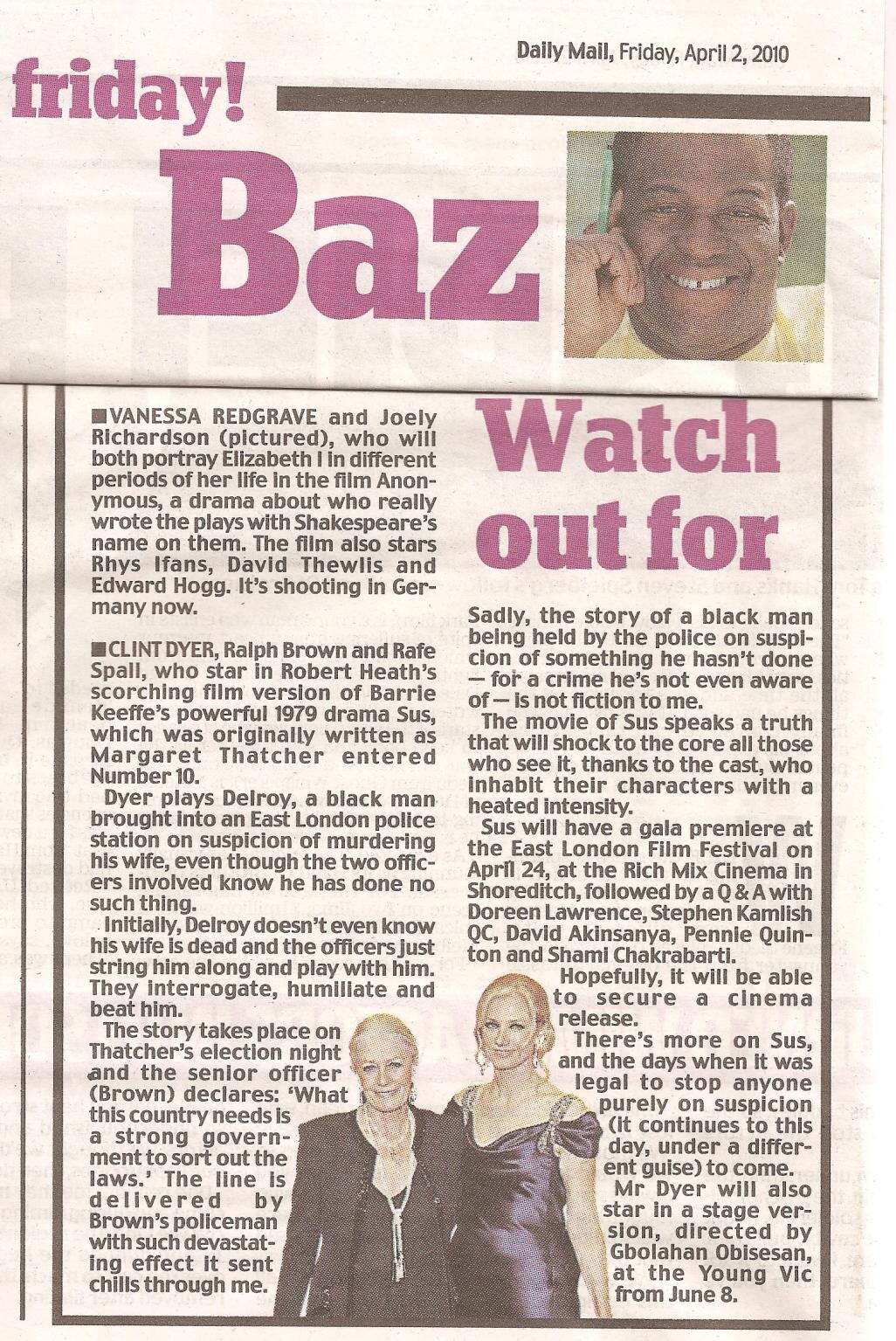
- 2 April 2010Baz Bamigboye picks the film in the Daily Mail.
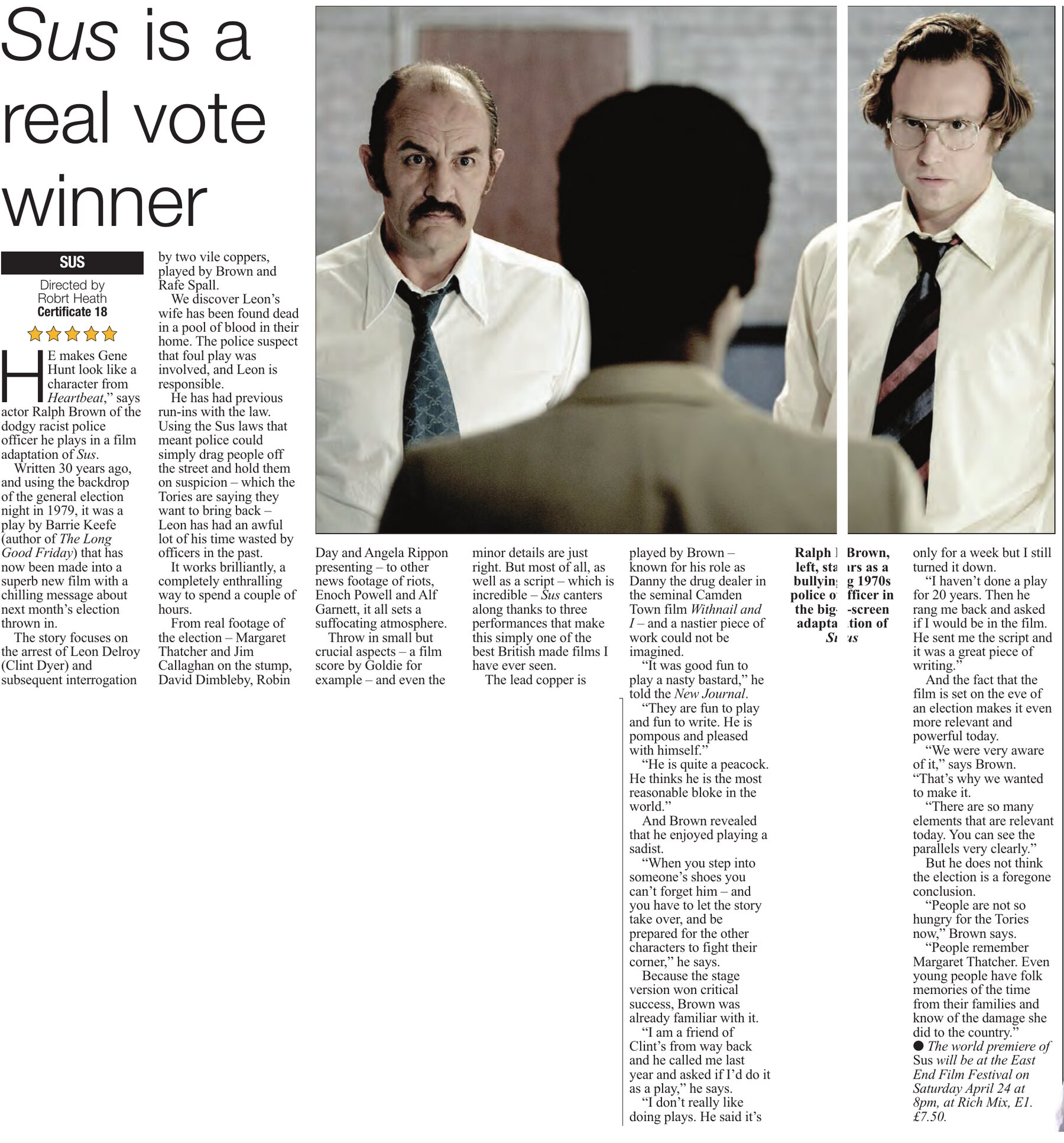
- 15 April 2010Camden New Journal, five stars: “Sus is a real vote winner”.
- 24 April 2010World premiere at the East End Film Festival, Rich Mix, Bethnal Green Road. Panel with Doreen Lawrence, Stephen Kamlish QC, David Akinsanya, Pennie Quinton and Shami Chakrabarti, with the director and cast.
- 2 May 2010Clint Dyer interviewed in The Voice.
- 6 May 2010General election. Camden New Journal gives the film a second five-star review.
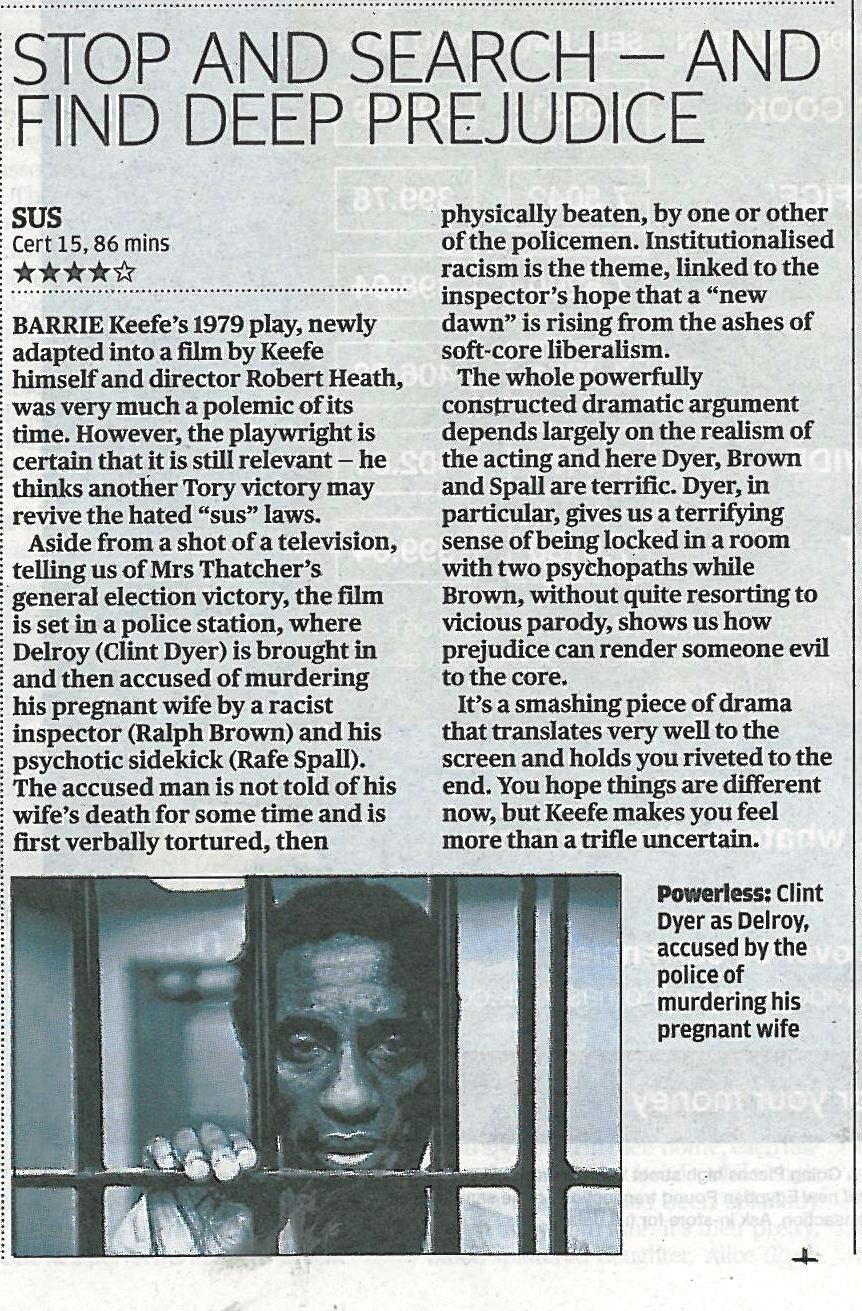
- 7 May 2010UK cinema release through Independent. Evening Standard, four stars.
- 14 and 15 May 2010The play at The Broadway, Barking, with Clint Dyer.
- From 8 June 2010Young Vic stage production, directed by Gbolahan Obisesan, with Clint Dyer.
In their own words
Clint Dyer, Delroy and producer
From “When police behaviour looks sus”, interview by Davina Morris, The Voice, 2 May 2010.
“Sus reflects a lot of my experiences with the police, and experiences of other people I know. It's important that people get to the heart of the matter. We all know that these situations happen. But most of the time, we never feel the right type of sympathy for the person it's actually happening to.”
“This is a moving story about the actual victim, and it really penetrates the heart instead of the head.”
“What I hope is that this film makes youngsters more political and shows them that they have every right to go where they want.”
“My biggest hope is that it reaches both black and white audiences. It's neither a black or a white story. It's about England.”
Ralph Brown, DS Karn
From “Sus is a real vote winner”, Dan Carrier, Camden New Journal, 15 April 2010.
“He makes Gene Hunt look like a character from Heartbeat.”
“He is quite a peacock. He thinks he is the most reasonable bloke in the world.”
“When you step into someone's shoes you can't forget him, and you have to let the story take over, and be prepared for the other characters to fight their corner.”
“People remember Margaret Thatcher. Even young people have folk memories of the time from their families and know of the damage she did to the country.”
Barrie Keeffe, writer
Quoted in “Keeffe's Brit angry men”, Camden New Journal, 6 May 2010.
“There was that sort of smell, hatred in the air. I was drawing on my experience of that fear. That prejudice, you can smell it when you're going to be the victim of it.”
Robin Mahoney, editor and producer
Hackney Gazette, 1 April 2010.
“It's about the attitudes people have to those who are different to them. Institutionalised racism and bigotry are themes that keep rearing over our heads. Our mission is to get as many people to see this and, hopefully, it will change a few minds.”
Quotes
“On stage it was disturbing. On film it's devastating.”
Bob Hoskins
“Highly-charged, socially conscious drama like this is not just welcome but necessary.”
New York Times
“Speaks a truth that will shock to the core.”
Baz Bamigboye, Daily Mail
“Intense and gripping, with terrific performances from all three actors.”
David Gritten, Daily Telegraph
“It's a smashing piece of drama that translates very well to the screen and holds you riveted to the end.”
Derek Malcolm, Evening Standard ★★★★
“Simply one of the best British made films I have ever seen.”
Dan Carrier, Camden New Journal ★★★★★
“If I could give this film six stars, I would.”
Dan Carrier, Camden New Journal ★★★★★
“Grim, relentless, thought-provoking and powerful.”
James Gracey, Eye for Film ★★★★½
“A completely enthralling way to spend a couple of hours.”
Camden New Journal
“A powerful cry against racism.”
Camden New Journal
Reviews and coverage
Evening Standard
Malcolm saw a polemic of its time that still carries weight. The whole argument, he wrote, rests on the realism of the acting, and Dyer, Brown and Spall are “terrific”. Dyer gives “a terrifying sense of being locked in a room with two psychopaths”. Brown, without tipping into parody, shows how prejudice can render someone evil to the core. “You hope things are different now, but Keeffe makes you feel more than a trifle uncertain.”
Camden New Journal
A five-star review alongside an interview with Ralph Brown. Carrier praised the use of real election night footage (Thatcher and Callaghan on the stump, David Dimbleby and Angela Rippon presenting) to build a suffocating atmosphere. “It works brilliantly, a completely enthralling way to spend a couple of hours.” He singled out the score and three performances that make it “simply one of the best British made films I have ever seen”.
Camden New Journal
A second five stars for the general release, published on election day. Carrier tied the film to the politics of 2010, from the rise of the BNP and the English Defence League to the media's treatment of immigration, and compared it to 12 Angry Men. “It is as powerful a cry against racism as I have encountered. Simply, if I could give this film six stars, I would.”
Eye for Film
Gracey praised Keeffe's slow-burning sense of dread, with suspense building in one interview room “until the claustrophobia becomes almost unbearable”. He called the performances “pitch perfect”: Dyer's “real sense of dignity and humanity”, Spall shaking off the comedy of Hot Fuzz to exude real menace, and Brown's Karn phoning his wife about dinner moments after telling Delroy that his own wife is dead. “Grim, relentless, thought-provoking and powerful, Sus is not an easy ride, but then it shouldn't really be.”
Daily Mail
Bamigboye called it a “scorching film version” of Keeffe's play. Karn's line, “What this country needs is a strong government to sort out the laws”, was delivered “with such devastating effect it sent chills through me”. He wrote that the story of a black man held on suspicion of something he hasn't done “is not fiction to me”, and that the film “speaks a truth that will shock to the core all those who see it”.
The Voice
An interview with Clint Dyer on why the revival matters to understanding black Britain's relationship with the police, from Section 44 stops to the stories British audiences borrow from America. See In their own words.
Hackney Gazette
The local paper on a Hackney-made film premiering at the East End Film Festival, with Robin Mahoney on how it was made and why.
Daily Telegraph and New York Times
“Intense and gripping, with terrific performances from all three actors.” (Telegraph). “Highly-charged, socially conscious drama like this is not just welcome but necessary.” (New York Times).
Press cuttings
Select any cutting to read it at full size.
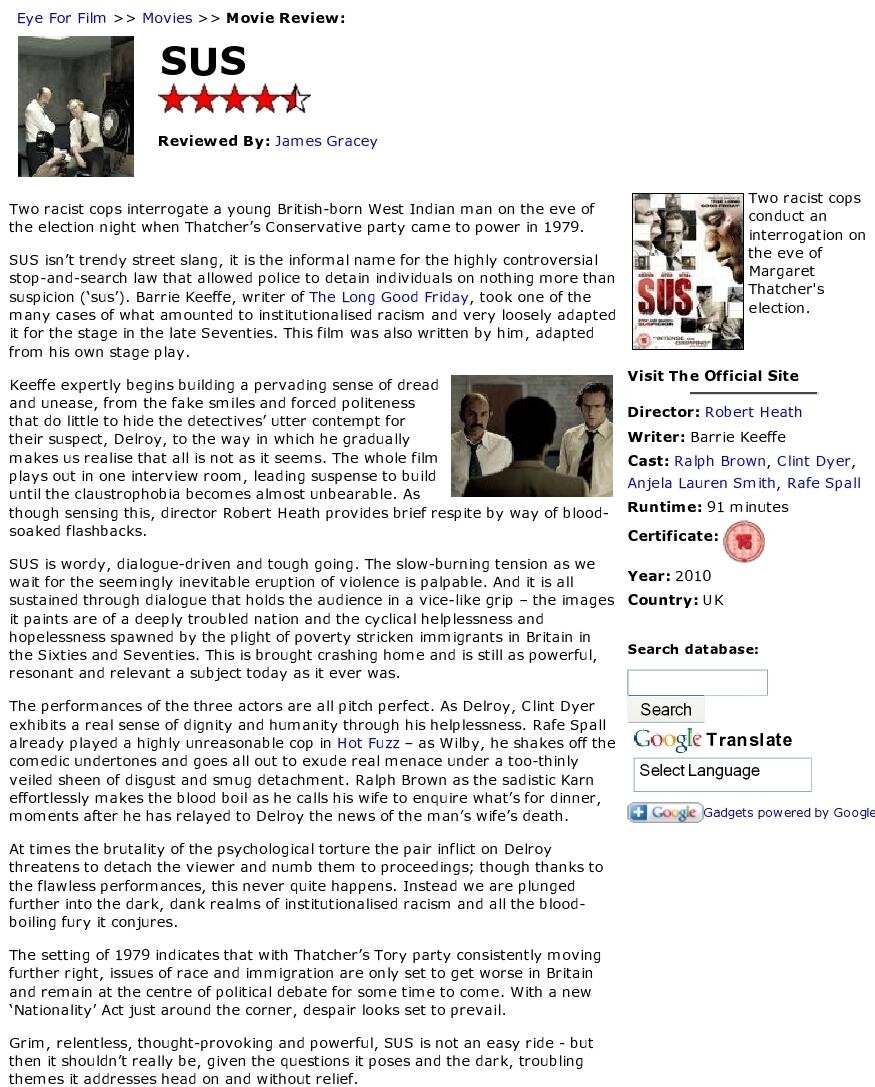
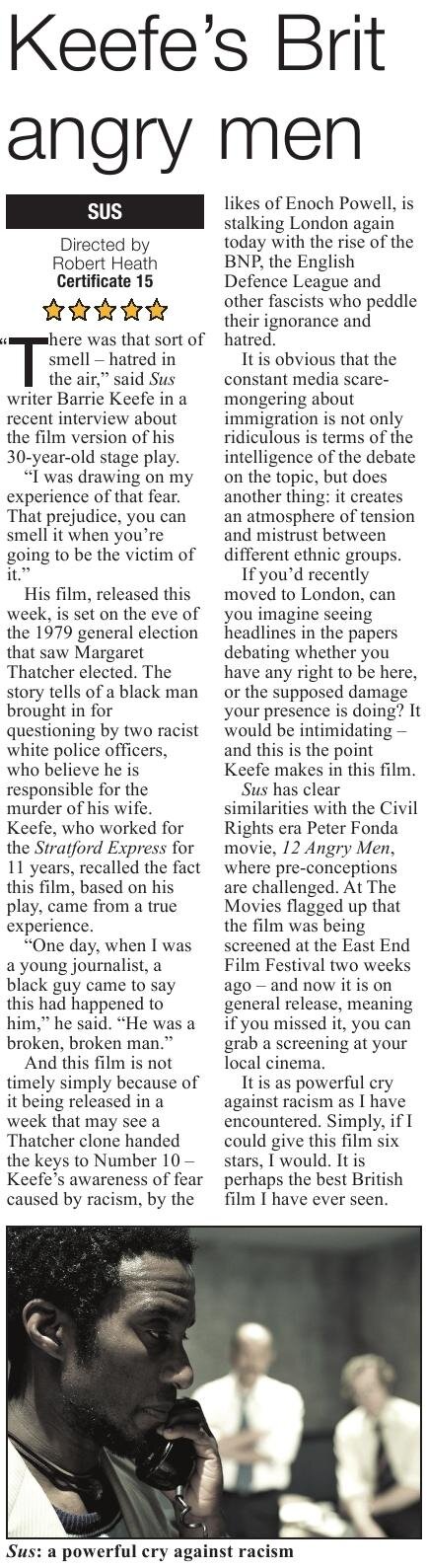
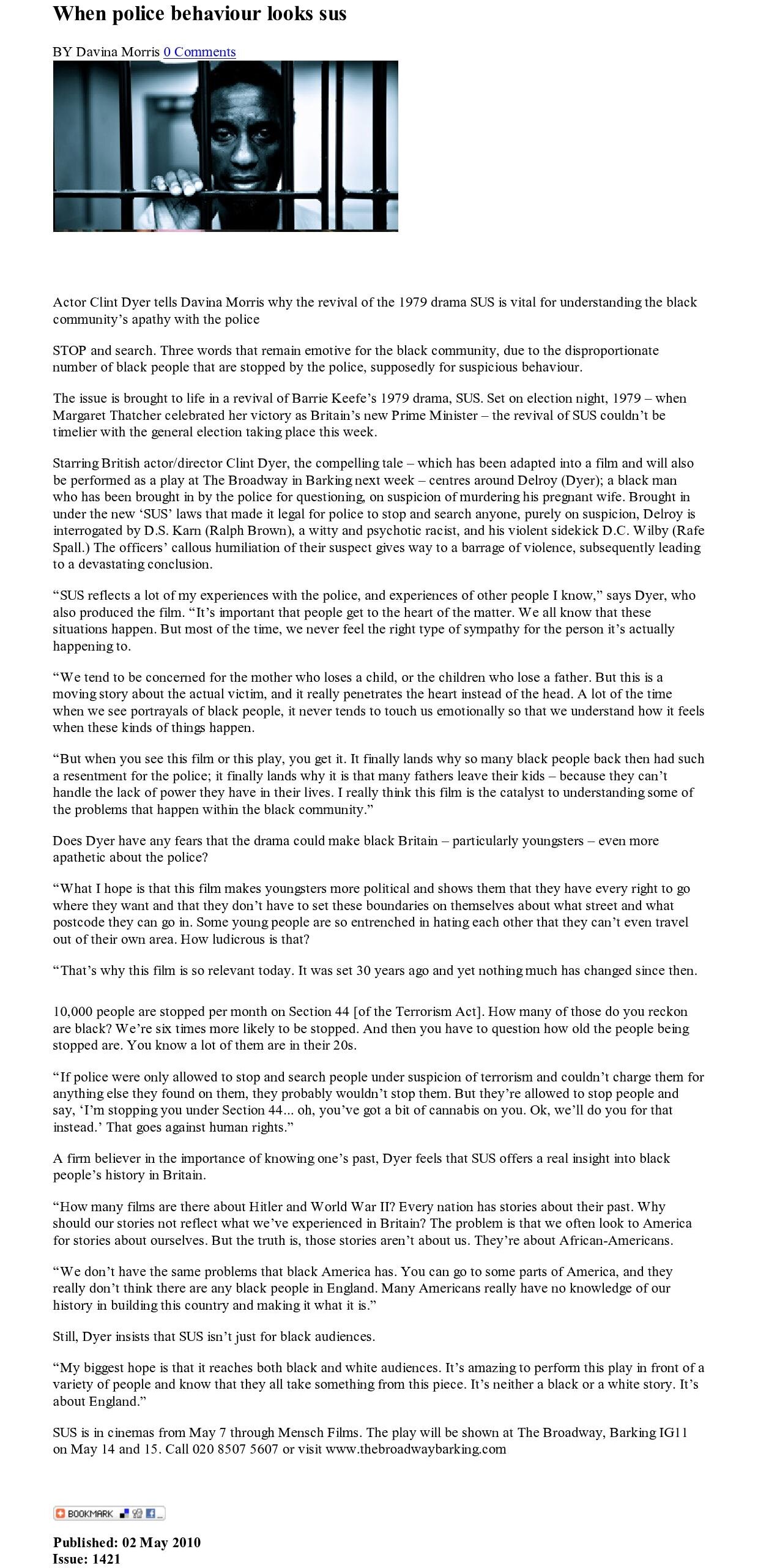
Production stills
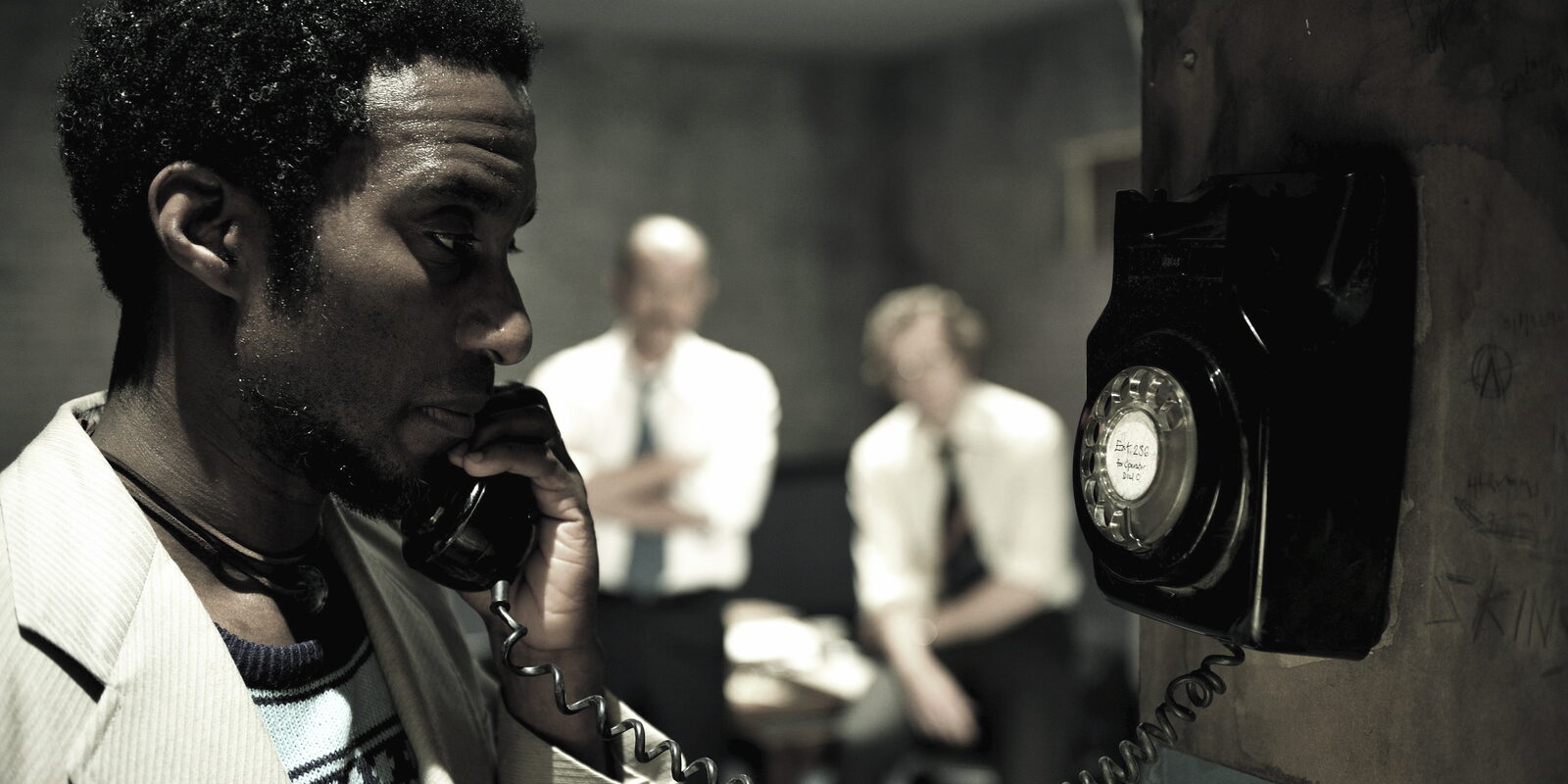
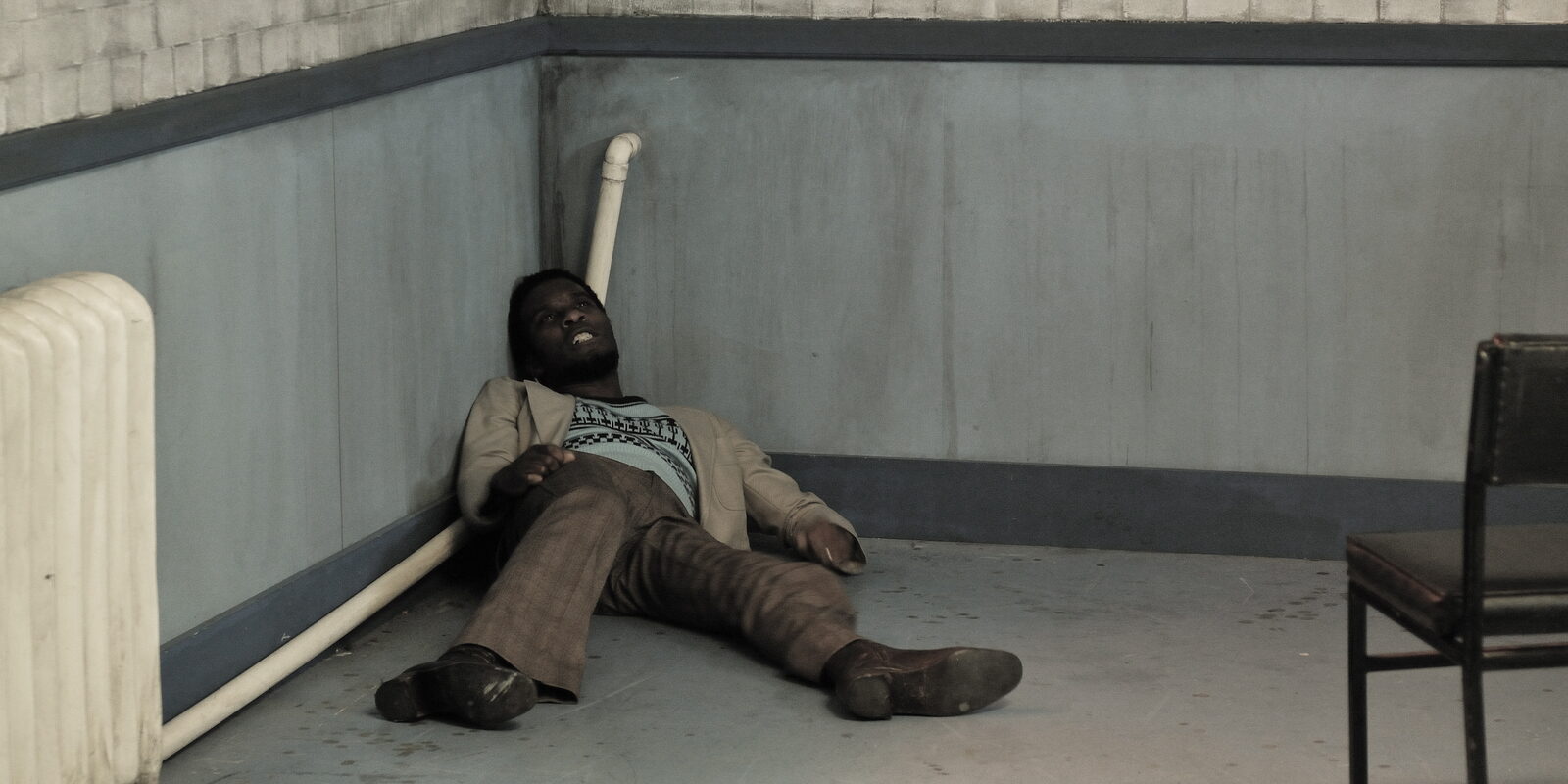
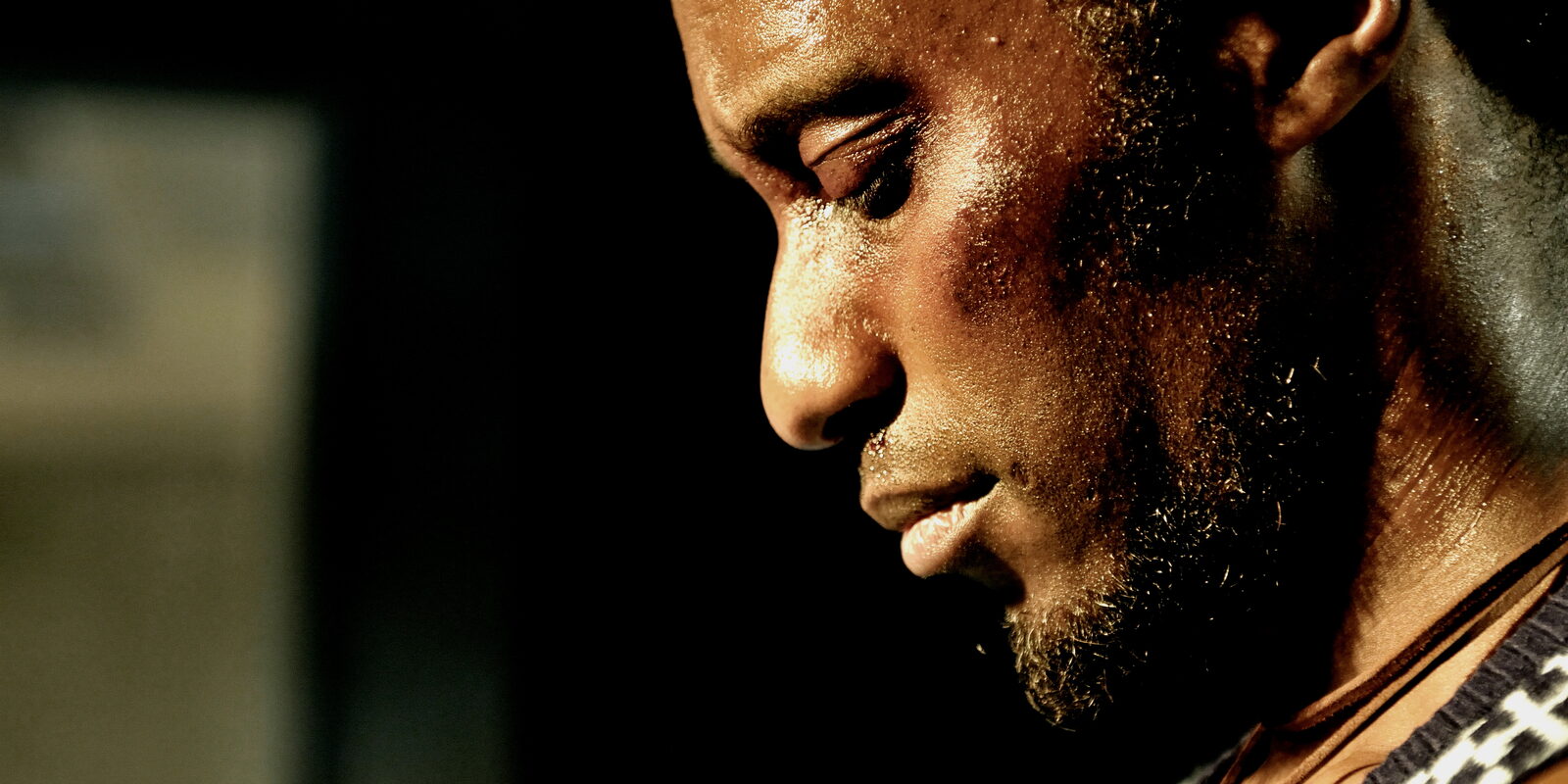
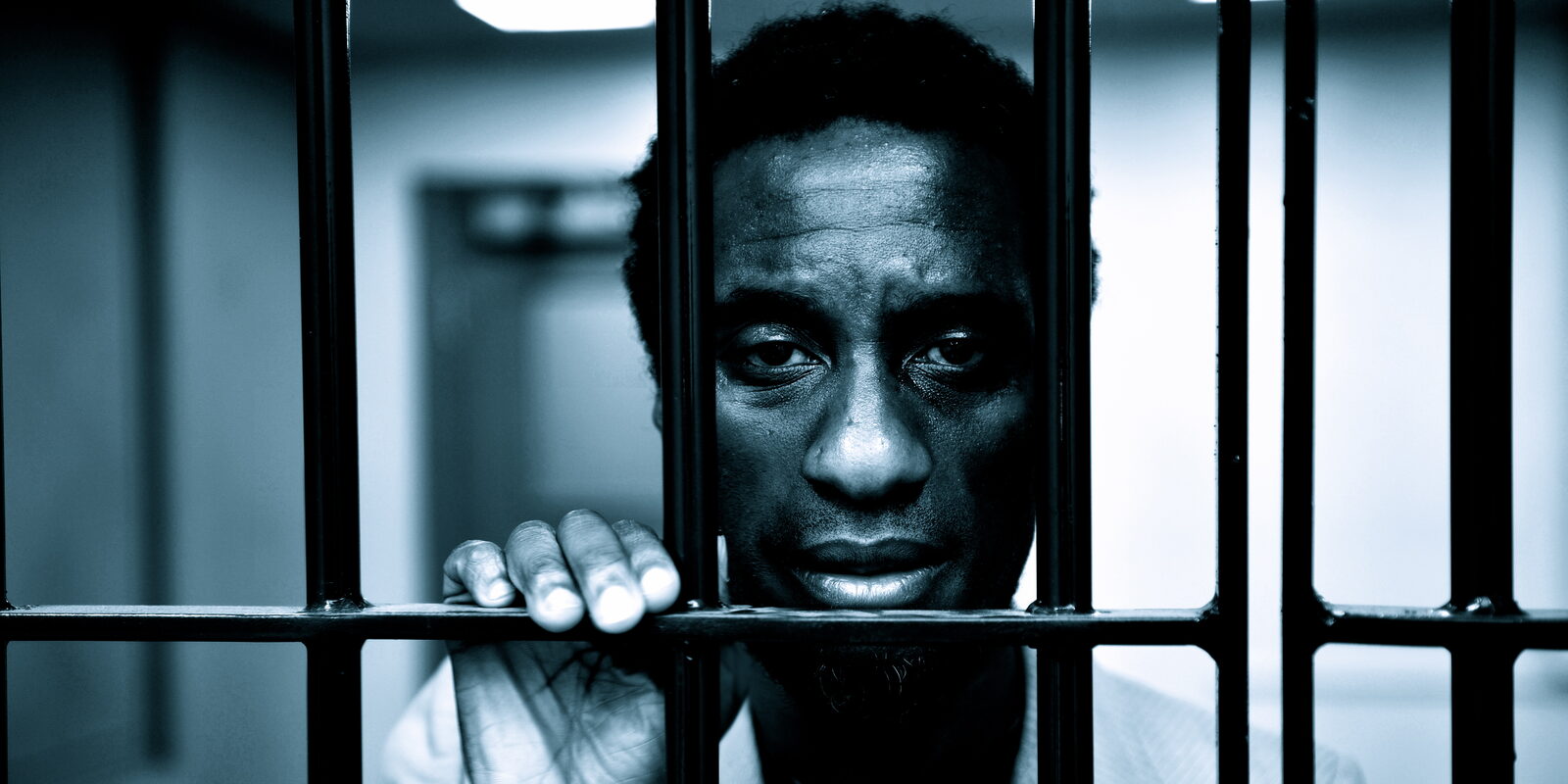
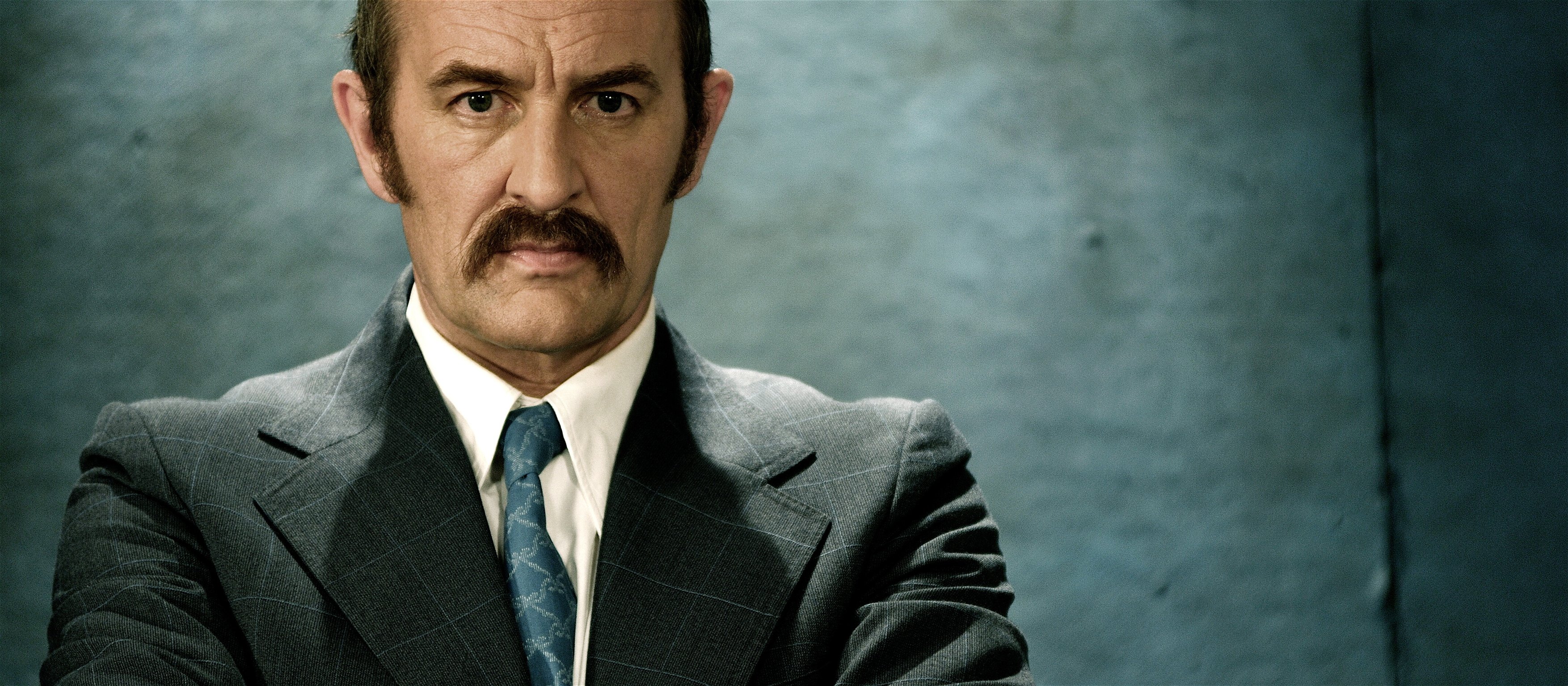
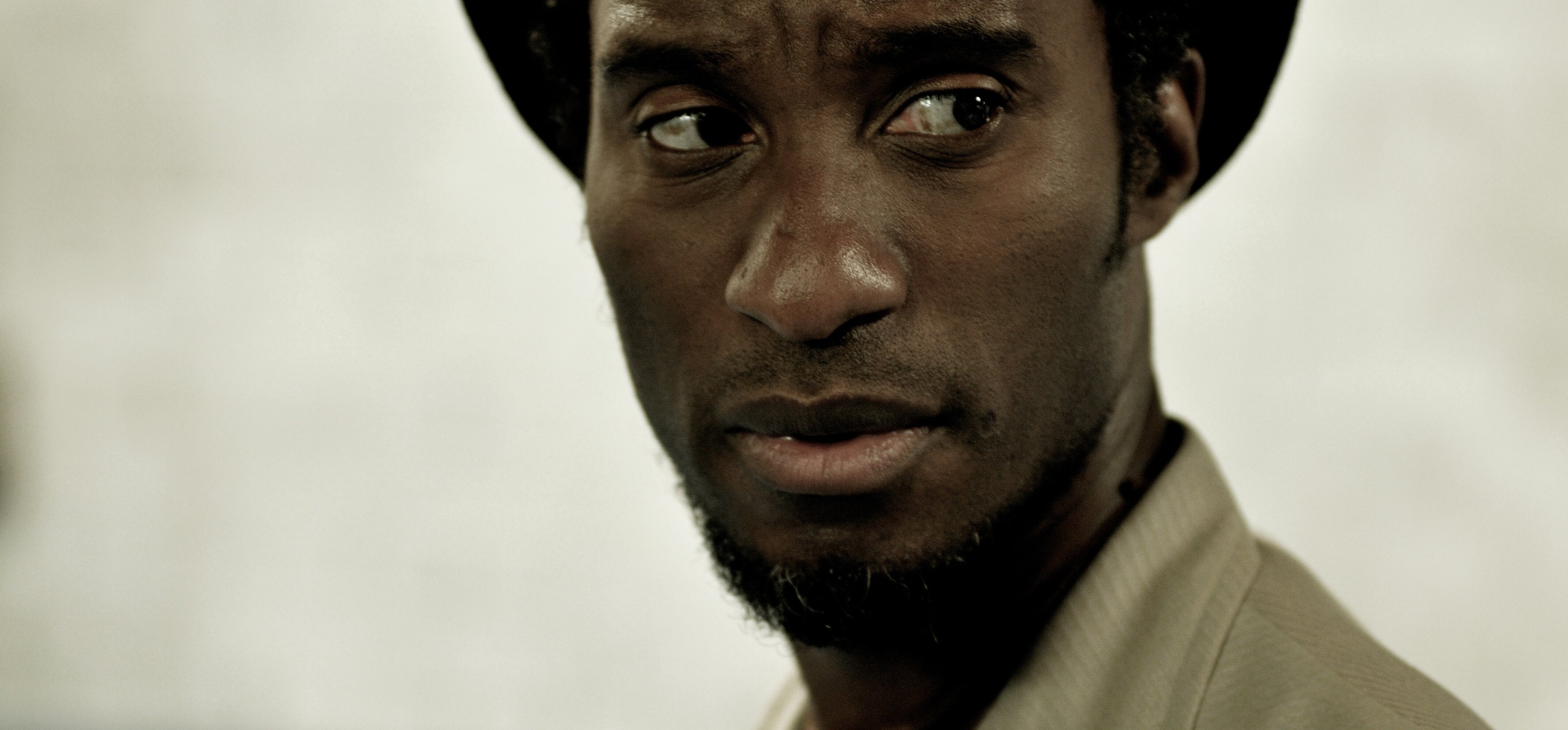
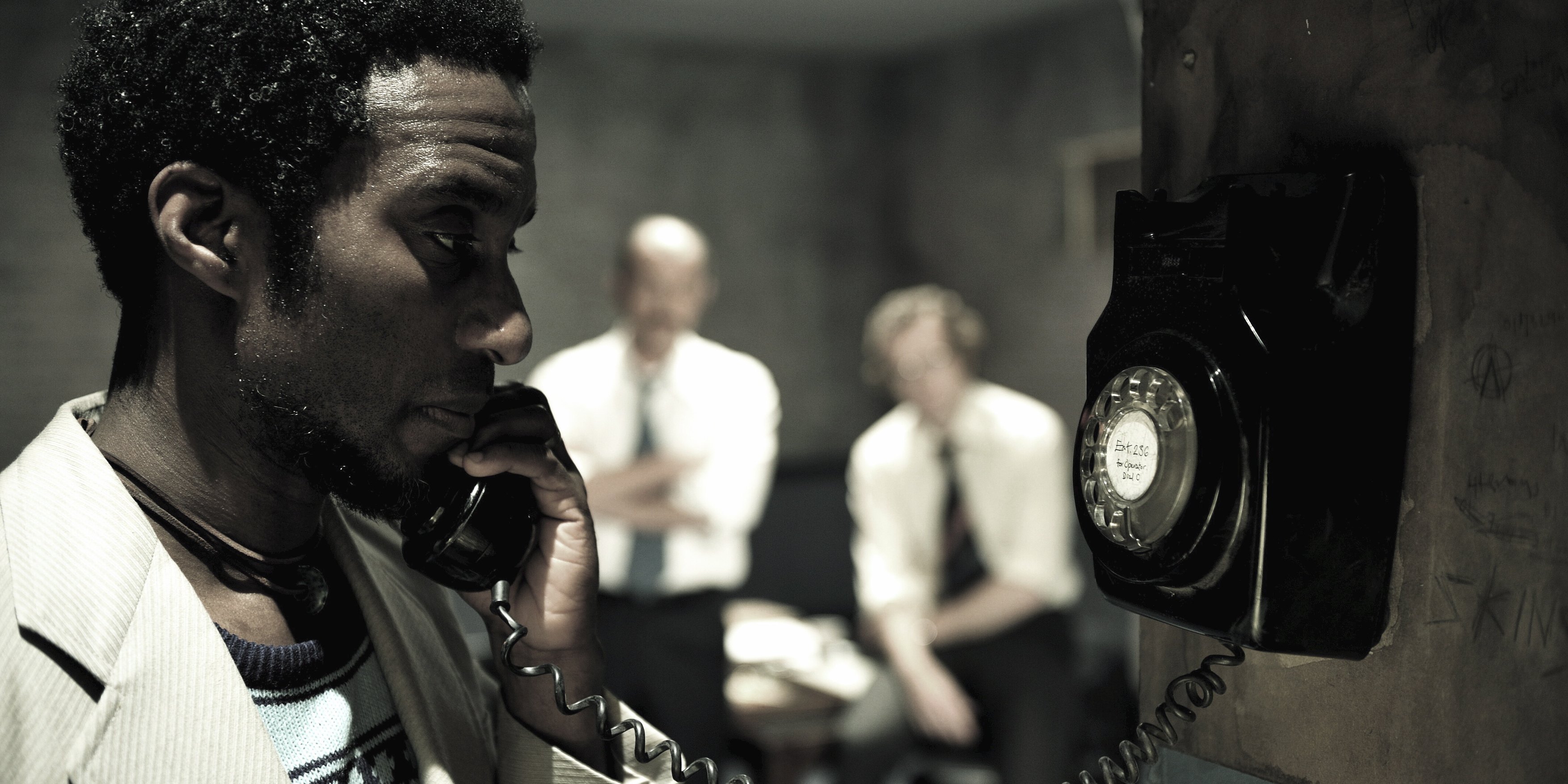
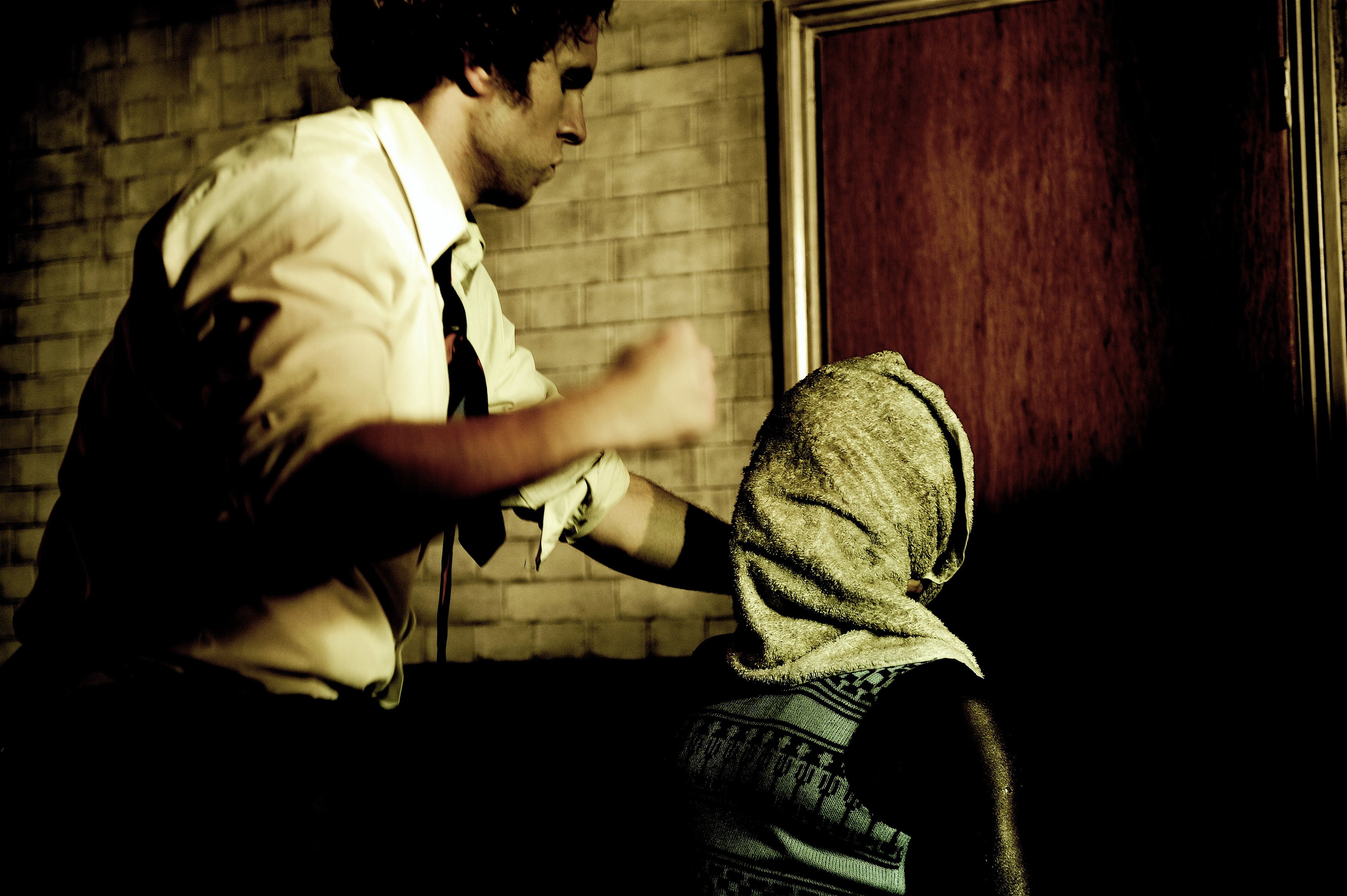
Photography by Alex Winn. Select any image for a larger version. Hi-res files are under Downloads.
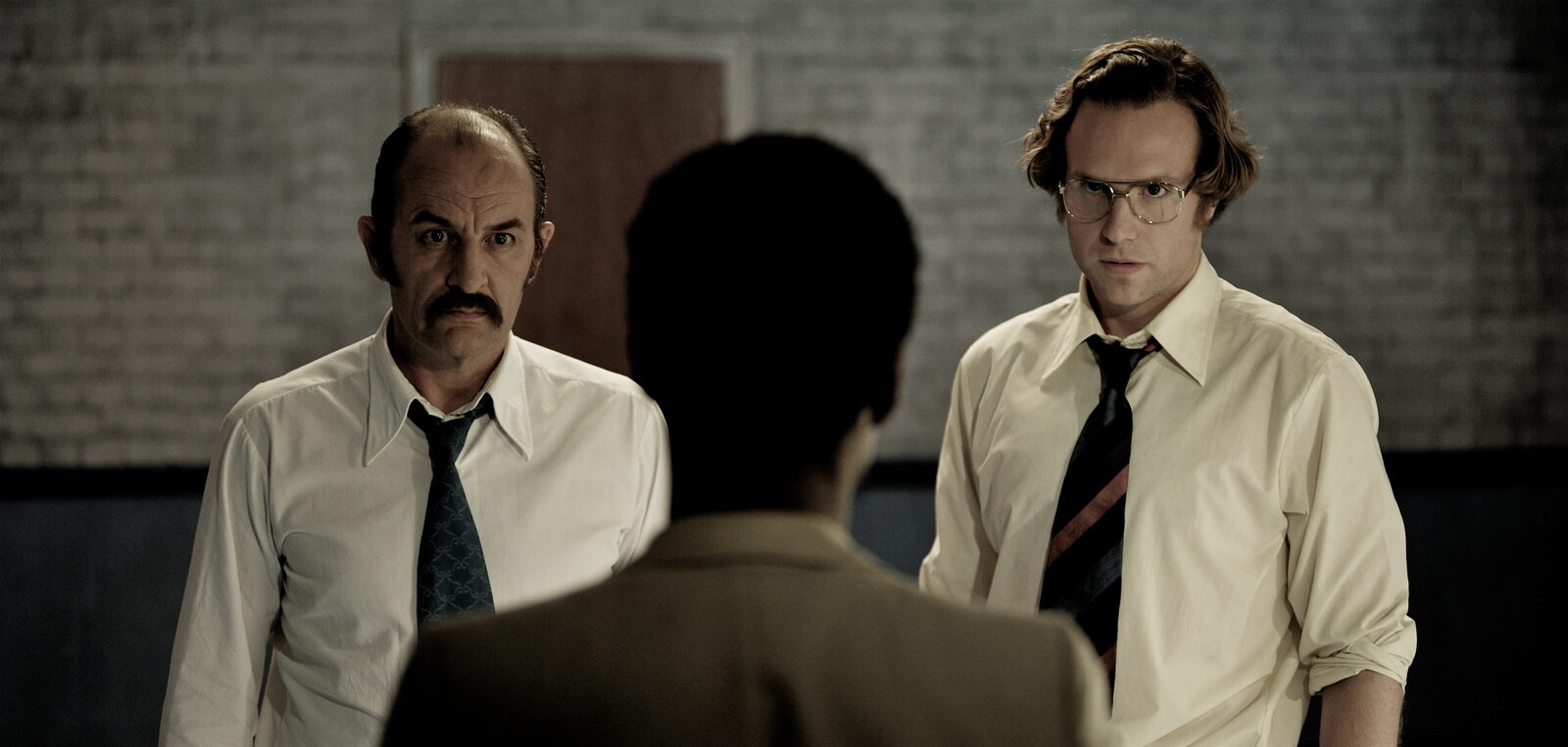
Cast
Biographies from the 2010 press notes.
Ralph Brown, DS Karn
Brown's film roles include Danny the dealer in Withnail & I, Dave in the Academy Award-winning The Crying Game, Ronnie Biggs in Buster, roadie Del Preston in Wayne's World 2, Mr Burton in Mean Machine, Sergeant Major Harris in Paul Schrader's Dominion: Prequel to the Exorcist, and CIA renegade Mr Collins opposite Wesley Snipes in The Contractor. He appeared in Steven Spielberg's Amistad and played DJ Bob Silver in Richard Curtis's The Boat That Rocked (2009). On television he played Miami Vice in Lock, Stock… and Frank Morgan in Life on Mars. As a writer he won the Samuel Beckett Award for his first play, Sanctuary, later nominated for two Helen Hayes Awards, and wrote New Year's Day, winner at Raindance and Sapporo in 2001.
Clint Dyer, Leon Delroy
Dyer had acted for twenty years in film, television and theatre, in films including The Trail, Cherps, Mr Inbetween, Everybody Loves Sunshine and Love Me Still, and on television in Prime Suspect, Trial & Retribution, Dalziel & Pascoe, The Commander, Lock, Stock… and Thief Takers. On stage he worked with directors including Mike Leigh, Michael Attenborough, Jane Howell, Mike Bradwell, Dawn Walton and Philip Hedley. He directed the Olivier and Evening Standard nominated The Big Life, which took it to the Apollo on Shaftesbury Avenue: the first Black British musical in the West End.
Rafe Spall, DC Wilby
Spall was spotted in a National Youth Theatre production of Nicholas Nickleby. His films include Shaun of the Dead, The Calcium Kid, Green Street, where he played hooligan Swill opposite Charlie Hunnam, Hot Fuzz and the Grindhouse segment Don't. He went on to play William Shakespeare in Roland Emmerich's Anonymous.
Anjela Lauren Smith, Georgie
Smith has played gritty leads in Babymother and 24 Hours in London, and appeared opposite Chiwetel Ejiofor in Simon Mirren's Greenwich Mean Time. Her television includes Martina Cole's The Jump and The Amazing Mrs Pritchard, and her films Cherps and Guy Ritchie's Revolver.
Filmmakers
Biographies from the 2010 press notes.
Robert Heath, director and producer
Heath has worked in film since 1991. His first short as writer and director, Cereal Killer (2000), played Edinburgh, London and Berlin and won the Canal+ Prix for Best European Short at Brest. His second, Ice Cool Reception, played the London and Los Angeles festivals and was runner-up in the TCM Classic Shorts competition. His first feature, Out on a Limb (2004), won Best Comedy at the Wine Country Film Festival and Best Actress at Cherbourg, and was released in UK cinemas in 2005. He has also made award-winning documentaries and promos for the Discovery Channel and Channel 4.
Robin Mahoney, editor and producer
Mahoney produced his first feature, The Punk, which premiered at Cannes and was released in the UK, Australia, Canada, France and Japan. He then directed, produced, shot and edited Glastonbury The Movie, the first British feature funded by the National Lottery through the BFI, which premiered at the London Film Festival. He cut and associate produced Heath's Cereal Killer. Through Mensch Films he has made chart-topping music DVDs with Basement Jaxx, The Prodigy, Pixies, The White Stripes, Lemon Jelly and Dizzee Rascal. The Pixies release was nominated for Best Music DVD at the 2005 NME Awards. He was creative director for the multimedia work on Amnesty's Secret Policeman's Ball, nominated for a BAFTA and the Rose d'Or. His audiovisual album We Made Our Own Disaster came out the same year as Sus.
Jono Smith, director of photography and producer
Born in New Zealand, Smith had 23 years behind the camera by 2010. His features include Mad Dogs and Bollywood Queen, selected for Sundance and James McAvoy's first lead role. On television he shot the first series of Peep Show, three series of Derren Brown and the first series of ITV's The Fixer, winner of the RTS award for Best Drama.
Clint Dyer, producer
Sus was the first film produced by Dyer's 3rd Eye Films. He had directed a trilogy of shorts with Positive Strides UK. Pukka won at the Notting Hill Film Festival and played Seattle and Cannes. One of Us won Best Drama at the Hollywood Very Short Movie awards and was named one of the UK Film Council's top ten shorts. Second Chance played Raindance and Clermont-Ferrand. As a writer he has been commissioned by Scala Films, Screen East, the Royal Court and Soho Theatre.
Mark Sutherland, production designer and co-producer
Sutherland designed his first feature, White Angel, in 1993 for Living Spirit Pictures, and has worked with them since, including on Urban Ghost Story and the short Gone Fishing. He collaborated with Positive Strides UK on all three of Clint Dyer's shorts. His drama credits include Crooked House for the BBC, Gulliver's Travels, and art direction on Mark Gatiss's The First Men in the Moon.
Full credits
Thin Film Productions, Mensch Films and 3rd Eye Films present.
| Director | Robert Heath |
|---|---|
| Screenplay | Barrie Keeffe, based on his stage play |
| Producers | Clint Dyer, Oliver Ledwith, Robin Mahoney, Robert Heath, Jono Smith |
| Executive producers | Rezmin Saberi, Philippe Derimay, Claire Castera |
| Director of photography | Jono Smith |
| Editor | Robin Mahoney |
| Production designer | Mark Sutherland |
| Music | Sally Herbert |
| Costume designer | Linda Haysman |
| Make-up designer | Alison Hanken |
| Cast | |
| DS Karn | Ralph Brown |
| Leon Delroy | Clint Dyer |
| DC Wilby | Rafe Spall |
| Georgie | Anjela Lauren Smith |
| Production | |
| 1st assistant director | Tom White |
| 3rd assistant director | Keiran Mahon |
| Line producer | Oliver Ledwith |
| Production manager | Claire Castera |
| Script supervisor | Julie Daly-Wallman |
| Art director | Cassandra Macmahon |
| Construction manager | David Engleman |
| Scenic painter | Jenny Anderson |
| Set painters | Richard May, Peter Carroll, Axelle Russo |
| Carpenters | Ian Wood, Guy Hunt, Brendan Say, Andrue Goldden |
| Props assistant | Jane Wilson |
| Costume design assistant | Josie Thomas |
| Costume assistant | Cherish Rufaro Mutambara |
| Make-up artist | Clarice Gill |
| Make-up assistant | Carli Vallance |
| Make-up trainee | Katy Leigh |
| Fight co-ordinator | Clive Curtis |
| Stills photographer | Alex Winn |
| Production runners | Katrina Hardy Saenz, Thom Undrell |
| Camera, lighting and sound | |
|---|---|
| Camera operators | Jono Smith, Arun Taylor |
| Crane and Steadicam | Arun Taylor |
| 1st assistant camera | Paul Newton, Andrew Trewartha |
| 2nd assistant camera | Tony White, Morgan Spencer |
| RED camera consultant | Danny Gagatt |
| Digital imaging technician | Johanna Ambaye |
| Gaffer | Stephen O'Connell |
| Grip | Peter Olney |
| Sound recordist | Paul Stadden |
| Additional sound recordist | Charlie Weisfeld |
| Boom operator | Saul Carbonaro |
| Post-production | |
| Additional editing | Robert Heath, Pani Ahmadi-Moore |
| Editor's assistant | Jonny Doggett |
| Post-production co-ordination | Mensch Films |
| Colourist | Dave Ludlam |
| Digital picture conform | James Long |
| Title sequence | Sacha Austin |
| Sound designer | Tim Harrison |
| Re-recording mixer | Paul Harris |
| Dialogue editor | Anna Bertmark |
| Dialogue premixer | Peregrine Andrews |
| ADR and foley recordist | Emanuele Costantini |
| Foley | Mark Verner, Alexander Robinson, Alistair Nicholls |
| Sound post supervision | Aumeta |
| Re-recording | Postbox Audio, Mint. Final mix at Ascent 142 |
| Music and archive | |
| Cello | Ian Burdge |
| Additional music | Goldie, Nicholas Sutton, Joss Albert |
| “It's Up to You” | The Specials. 2 Tone (Jerry Dammers) |
| “No Woman No Cry” | Lyrics by Bob Marley, by kind permission of The Marley Estate |
| Additional material | Don Letts, BBC, Menelik Shabazz |
| Facilities | |
| Studio | Elstree Studios |
| Camera equipment | Benedict Spence |
| Lenses and grip | Aimimage |
| Lighting | Location Lighting |
| Jib | Joemac Ltd |
| Make-up | MAC |
© 2010. Shot at Elstree Studios and on location in London.
Downloads
High-resolution production stills for press use. Please credit “Sus (2010). Photo: Alex Winn”.
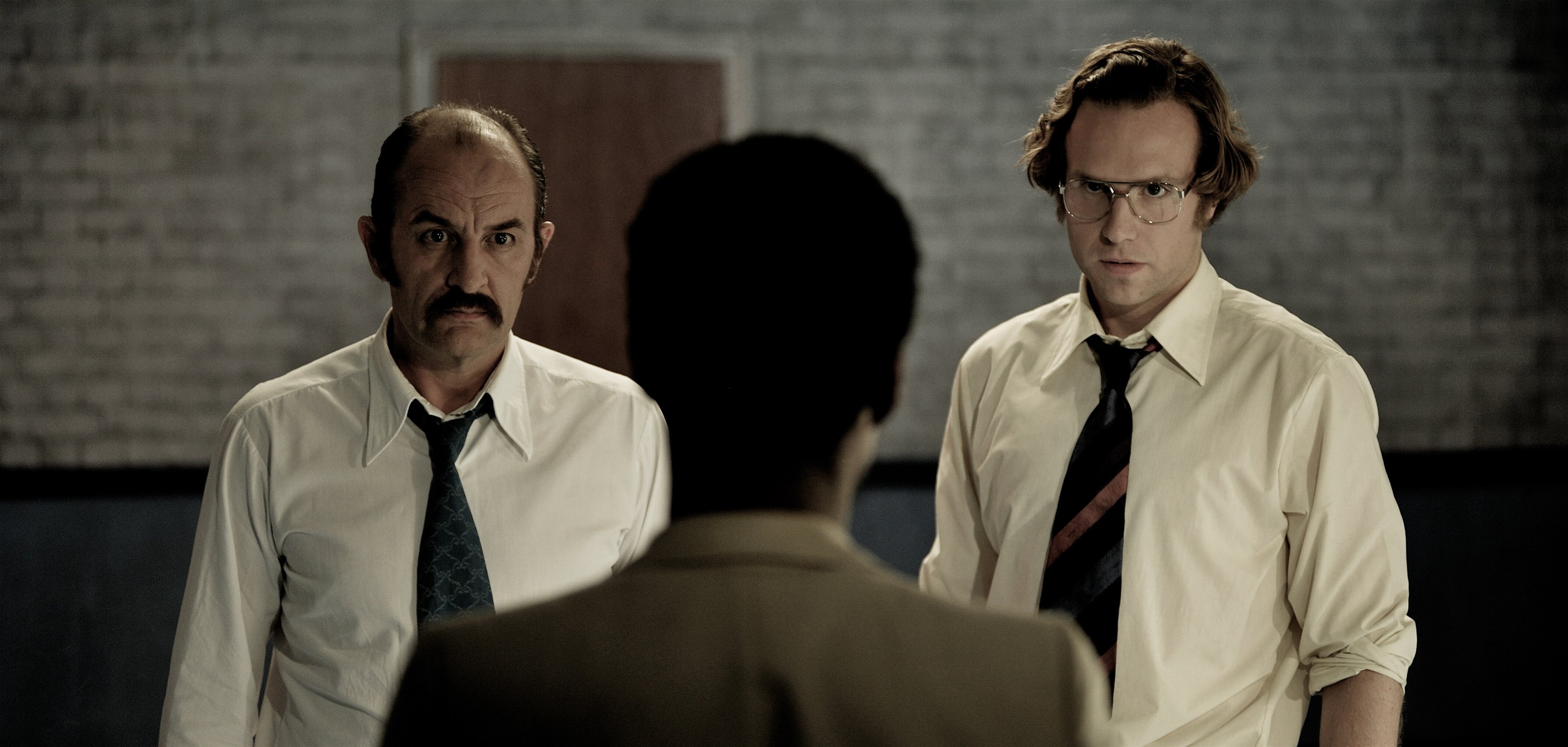
- Karn and Wilby face DelroyJPEG, 3508 × 1672, 300 dpi, 850 KB
- Ralph Brown as DS KarnJPEG, 3508 × 1535, 300 dpi, 1.4 MB
- Clint Dyer as DelroyJPEG, 3508 × 1633, 300 dpi, 630 KB
- Delroy on the telephoneJPEG, 3508 × 1754, 300 dpi, 780 KB
- Rafe Spall as DC WilbyJPEG, 3508 × 2334, 300 dpi, 1.0 MB
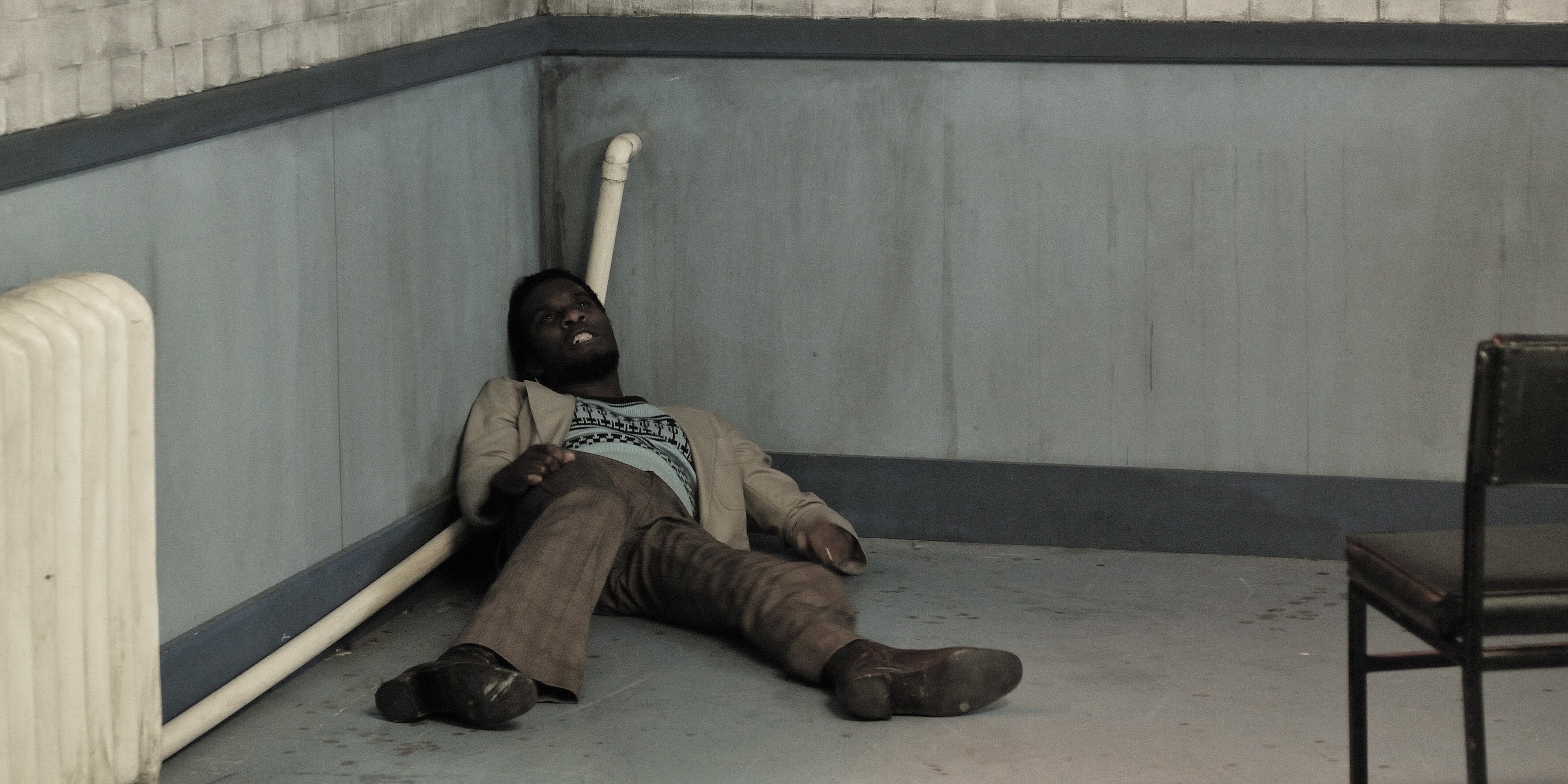
- Delroy on the interview room floorJPEG, 3508 × 1753, 300 dpi, 1.0 MB
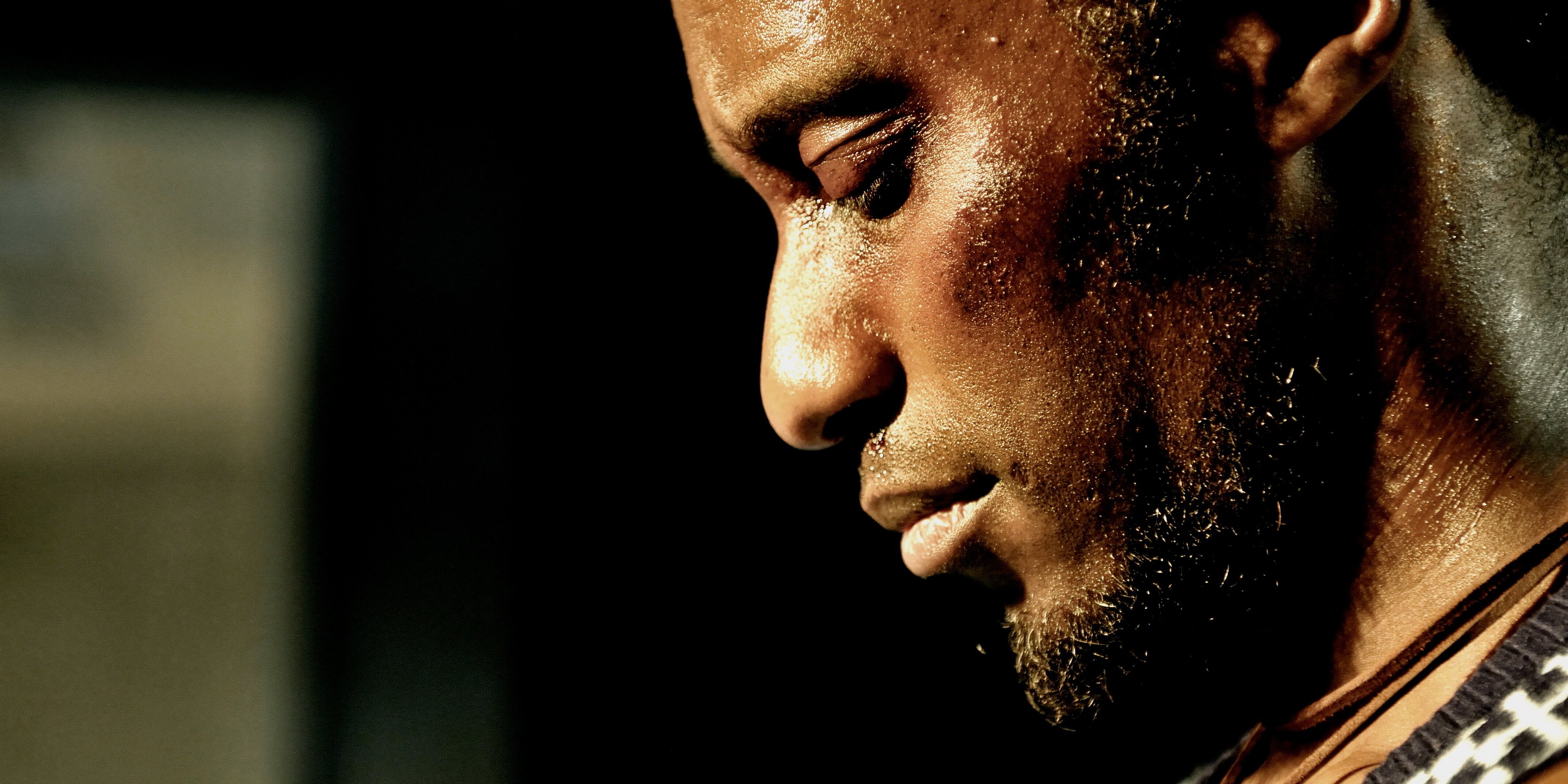
- Delroy, head bowedJPEG, 3508 × 1753, 300 dpi, 830 KB
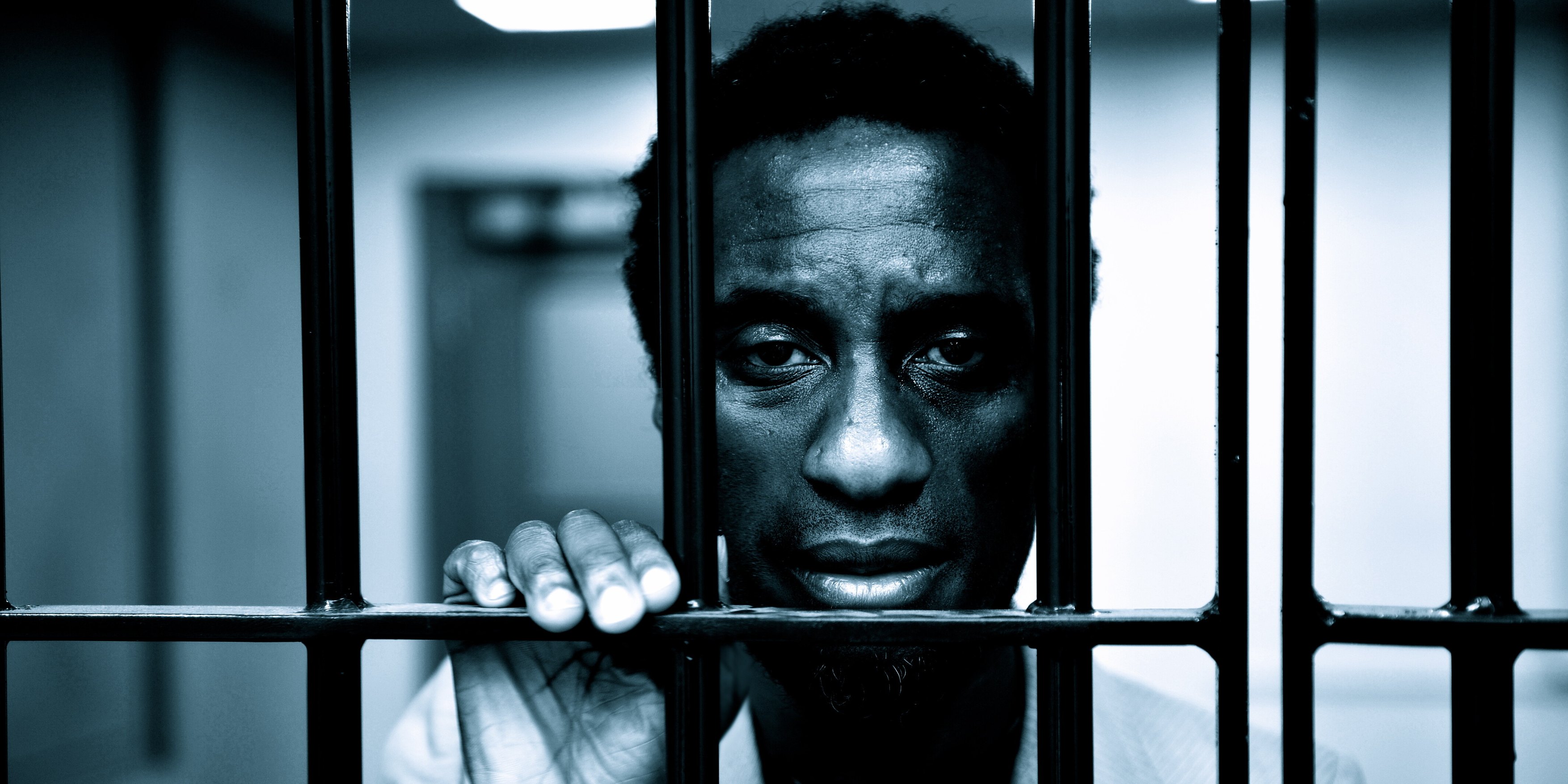
- Delroy in the cellJPEG, 3508 × 1754, 300 dpi, 670 KB
Contact
Screenings, festival programming, licensing and press: hello (at) menschfilms (dot) com